NYX-GEN BIO
NYX-GEN BIO
  • Home
  • Shop
  • RESEARCH COMPOUNDS
    • Retatrutide
    • Tirzepatide
    • Lemon Bottle
    • GLOW
  • INFORMATION
    • Pharmacokinetics
    • Fat Oxidation Capacity
    • Basel Metabolic Rate
    • Peptide Storage
    • Peptide Reconstitution
  • WEIGHT LOSS
    • Foundation of Weight Loss
    • Hormones & Weight Gain
  • NUTRITION
    • Nutrition on GLP-1 Meds
    • Nausea on GLP-1 Meds
    • Protein Intake
    • GLP-1 & Digestion
  • More
    • Home
    • Shop
    • RESEARCH COMPOUNDS
      • Retatrutide
      • Tirzepatide
      • Lemon Bottle
      • GLOW
    • INFORMATION
      • Pharmacokinetics
      • Fat Oxidation Capacity
      • Basel Metabolic Rate
      • Peptide Storage
      • Peptide Reconstitution
    • WEIGHT LOSS
      • Foundation of Weight Loss
      • Hormones & Weight Gain
    • NUTRITION
      • Nutrition on GLP-1 Meds
      • Nausea on GLP-1 Meds
      • Protein Intake
      • GLP-1 & Digestion
  • Sign In
  • Create Account

  • Orders
  • My Account
  • Signed in as:

  • filler@godaddy.com


  • Orders
  • My Account
  • Sign out

Signed in as:

filler@godaddy.com
  • Home
  • Shop
  • RESEARCH COMPOUNDS
    • Retatrutide
    • Tirzepatide
    • Lemon Bottle
    • GLOW
  • INFORMATION
    • Pharmacokinetics
    • Fat Oxidation Capacity
    • Basel Metabolic Rate
    • Peptide Storage
    • Peptide Reconstitution
  • WEIGHT LOSS
    • Foundation of Weight Loss
    • Hormones & Weight Gain
  • NUTRITION
    • Nutrition on GLP-1 Meds
    • Nausea on GLP-1 Meds
    • Protein Intake
    • GLP-1 & Digestion

Account

  • Orders
  • My Account
  • Sign out

  • Sign In
  • Orders
  • My Account

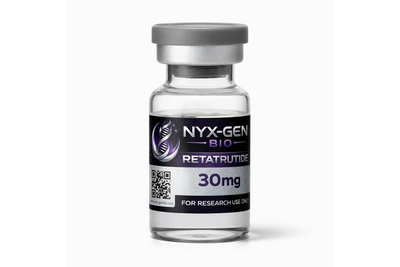
RETATRUTIDE

What is Retatrutide?

Retatrutide is an investigational peptide studied for its activity as a multi-receptor agonist targeting the glucagon-like peptide-1 (GLP-1), glucose-dependent insulinotropic polypeptide (GIP), and glucagon (GCGR) receptors.

It is referenced in scientific literature within pre-clinical and clinical research settings exploring metabolic signaling pathways and energy regulation mechanisms. Retatrutide is not approved as a pharmaceutical drug.


Research Background

Retatrutide has been developed as part of research into next-generation metabolic peptides with multi-pathway receptor activity.

In experimental and clinical research environments, it has been examined for its interaction with:

  • GLP-1 receptor signaling
  • GIP receptor signaling
  • Glucagon receptor signaling
     

These combined pathways differentiate Retatrutide from single-receptor and dual-receptor agonists currently used in approved therapies.

Proposed Mechanisms of Action (Pre-clinical / Clinical Research Context Only)

Based on published research, Retatrutide has been studied in relation to:

  • Modulation of appetite and satiety signaling pathways
  • Regulation of glucose metabolism
  • Influence on energy expenditure pathway 
  • Multi-receptor agonist activity affecting metabolic signaling networks
     

These observations are derived from controlled research environments and do not establish clinical outcomes.

Areas of Scientific Interest

Within research literature, Retatrutide has been explored in connection with:

  • Metabolic disorder research
  • Obesity and weight-related pathway studies
  • Insulin sensitivity and glucose regulation research
  • Hormonal signaling pathway characterization
     

Findings remain under investigation and continue to evolve.

Pharmacokinetics (Research Context Only)

Pharmacokinetic characteristics of Retatrutide have been evaluated within clinical research programs.

Published materials describe Retatrutide as a long-acting peptide designed for extended systemic exposure in research settings. Detailed human pharmacokinetic parameters may vary depending on study design and population.

No standardized or clinically approved pharmacokinetic profile has been established for general medical use.

Research Status

  • Retatrutide is an investigational compound 
  • It is not approved by regulatory authorities as a prescription medication 
  • It is not authorized for human therapeutic use
     

Common Research Questions

Is Retatrutide FDA approved?
No. Retatrutide is currently an investigational peptide and has not received FDA approval as a pharmaceutical drug.

Is Retatrutide used in clinical trials?
Yes. Retatrutide has been evaluated in clinical research programs; however, it remains under investigation.

What makes Retatrutide different from other metabolic peptides?
Retatrutide is studied for triple-receptor agonist activity (GLP-1, GIP, and glucagon), whereas many existing agents target one or two of these receptors.

Regulatory & Research Disclaimer

This page is provided for informational and educational purposes only.

Retatrutide is not a medicine, not a dietary supplement, and not intended to diagnose, treat, cure, or prevent any disease. Any discussion of biological activity is based solely on publicly available research literature.

Learn More

 For publicly available research and clinical trial information on Retatrutide:

  • ClinicalTrials.gov — TRIUMPH-1 (Phase 3 obesity/overweight study): https://clinicaltrials.gov/study/NCT05929066
     
  • ClinicalTrials.gov — Phase 3 CVD obesity safety study: https://clinicaltrials.gov/study/NCT05882045
     
  • ClinicalTrials.gov — Renal & type 2 diabetes add-on studies: https://policylab.us/clinical-trials/l/treatments/retatrutide
     
  • NEJM Research Article — Triple-hormone receptor agonist study: https://www.nejm.org/doi/full/10.1056/NEJMoa2301972
     
  • Phase 3 topline trial results (industry report): https://www.pharmexec.com/view/pharmaceutical-executive-daily-retatrutide-positive-phase-iii-trial-results
     
  • Phase 3 clinical results overview: https://www.patientcareonline.com/view/retatrutide-achieves-up-to-28-7-weight-loss-and-marked-knee-pain-reduction-in-phase-3-triumph-4-trial
     

Retatrutide is currently being evaluated in late-stage clinical trials, and its safety, efficacy, and regulatory status continue to evolve as data emerge from ongoing studies. 

Titration Framework

Retatrutide is always started low and increased slowly to reduce GI side effects like nausea and vomiting.

  • Weeks 1–4: 2 mg once weekly
  • Weeks 5–8: 4 mg once weekly
  • Weeks 9–12: 8 mg once weekly
  • Weeks 13–16: 12 mg once weekly

General Medical Principles Behind the Titration

  • Start Low (2 mg)
    • This “starter” dose is usually not intended for strong weight loss, but for the body to adapt.
  • Stepwise 4-Week Increments
    • Each step (2 → 4 → 8 → 12 mg) is held for 4 weeks.
  • Target Dose Is Individual
    • Some patients remain at 4 - 8 mg weekly if efficacy is good and side       effects are minimal.
  • One Weekly “Anchor Day”
    • Injections are usually taken on the same day each week (e.g., every Monday).

Reconstitution

Reconstitution (15 mg vial)

  • Add 1.5 mL bacteriostatic water to the Retatrutide vial. (1.5ml on a 3ml syringe)
  • Clean the rubber stopper of the vial with an alcohol swab before inserting any needle.
  • Inject the water slowly into the Retatrutide vial and allow the powder to dissolve on its own.
  • Do NOT shake the vial.
  • Once the solution becomes fully clear, the vial is ready for use.
  • Store the reconstituted vial in the refrigerator, do NOT freeze.  
  • Final concentration: 15 mg in 1.5 mL → 10 mg/mL

Reconstitution

Reconstitution (30 mg vial)

  • Add 3.0 mL bacteriostatic water to the Retatrutide vial. (3.0 ml units on a 3.0 ml syringe)
  • Clean the rubber stopper of the vial with an alcohol swab before inserting any needle.
  • Inject the water slowly into the Retatrutide vial and allow the powder to dissolve on its own.
  • Do NOT shake the vial.
  • Once the solution becomes fully clear, the vial is ready for use.
  • Store the reconstituted vial in the refrigerator, do NOT freeze.  
  • Final concentration: 30 mg in 3.0 mL → 10 mg/mL

Administration

Self-Administration 

  • Use a new sterile 29G insulin syringe each time.
  • Clean the top of the vial with an alcohol swab before drawing up your dose.
  • Draw the prescribed amount (20 or 40 or 80 units).
  • Clean the injection site on your abdomen with an alcohol swab and allow it to dry.
  • Administer the dose subcutaneously.
  • Rotate injection sites each week.
  • Dispose of used needles in a sharp’s container.
  • Do not share vials or syringes with anyone.
  • Do not use the vial if the solution appears cloudy, discolored, or contains particles.

Copyright © 2026 NXY-GEN BIO - All Rights Reserved.

Powered by

  • Privacy Policy
  • Terms and Conditions

This website uses cookies.

We use cookies to analyze website traffic and optimize your website experience. By accepting our use of cookies, your data will be aggregated with all other user data.

Accept