Signed in as:
filler@godaddy.com
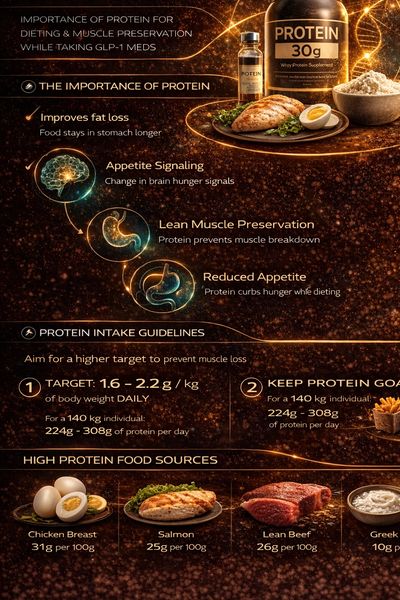
Weight loss often involves reductions in both fat mass and lean mass.
Lean mass includes:
Maintaining lean mass during weight loss is often discussed in relation to metabolic health and physical function.
Lean tissue contributes significantly to basal metabolic rate (BMR).
Muscle tissue requires energy to maintain, meaning individuals with greater lean mass often have higher resting energy expenditure.
Maintaining lean mass during weight reduction may help support:
Protein provides amino acids that support:
During weight loss, adequate protein intake is often discussed in scientific literature as one factor that may help support lean mass preservation.
Protein-rich foods can also influence satiety signaling.
Many individuals report that meals containing adequate protein contribute to:
This effect may complement appetite-regulating medications such as GLP-1 receptor agonists.
Examples of protein-containing foods include:
Food preferences and dietary patterns vary widely between individuals.
Protein alone does not drive fat loss.
Fat loss still depends on the broader relationship between energy intake and energy expenditure.
Protein primarily influences body composition, not weight loss itself.
This content is provided for informational and educational purposes only and does not constitute medical advice.