Signed in as:
filler@godaddy.com
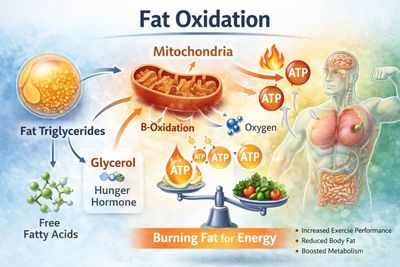
The term “fat tap” is sometimes used informally to describe the maximum rate at which the body can mobilize and oxidize (burn) stored body fat for energy over a given period of time.
It refers to a physiological limitation, not a fixed rule, and describes how much energy can be supplied from fat tissue under certain conditions.
This concept helps explain why extremely large calorie deficits do not always result in proportionally faster fat loss.
Some metabolic modeling and experimental research has estimated that, under typical conditions, the body may be able to derive roughly 60–70 kilocalories per day per kilogram of fat mass from stored body fat.
This value is often cited as an approximate average, not a universal limit.
Example interpretation:
If an individual has 20 kg of body fat, an estimated fat-derived energy supply might be:
20 kg × ~69 kcal/kg/day ≈ 1,380 kcal/day
This represents a theoretical estimate of how much energy could be provided by fat oxidation in that individual.
The 69 kcal/kg/day value:
It is not a hard cap and should not be interpreted as a strict ceiling.
Several physiological systems influence how quickly fat can be used for energy:
Adipose Tissue Blood Flow
Fatty acids must be transported from fat tissue into the bloodstream.
Greater blood flow improves fatty acid delivery.
Restricted blood flow limits mobilization.
Hormonal Environment
Hormones strongly influence fat mobilization:
Hormonal patterns vary between individuals.
Mitochondrial Capacity
Fatty acids must be oxidized inside mitochondria.
Greater mitochondrial number and efficiency increase the ability to burn fat.
Enzymatic Activity
Lipolytic and oxidative enzymes regulate:
Enzyme expression differs between individuals and adapts over time.
Body Fat Amount
Individuals with higher fat mass generally have a greater absolute capacity to supply energy from fat than lean individuals.
Why Large Deficits Can Lead to Lean Mass Loss
If energy demand exceeds what can be supplied from fat oxidation alone, the body may obtain additional energy from:
This helps explain why very aggressive deficits may increase the risk of lean mass loss.
Fat Oxidation vs Fat Loss
Fat oxidation = fat being used as fuel
Fat loss = net reduction in stored fat over time
A person can oxidize fat without achieving net fat loss if total energy balance does not favor loss.
Why the “Fat Tap” Is Not a Single Number
Fat oxidation capacity is dynamic.
It can change based on:
Because of this, no single number applies to everyone.
Relationship to Weight Loss Medications and Peptides
Some approved medications and investigational peptides are studied for their ability to influence:
They do not remove the fundamental physiological limits of fat oxidation. They may indirectly affect how energy balance is achieved.
Key Takeaways
Why Mitochondria Matter in Fat Loss
Fat loss is constrained not only by how much fat can be mobilized, but by how much fat can be oxidized (burned) inside cells.
Fatty acids must enter mitochondria and undergo oxidative metabolism to become usable energy.
Mitochondria therefore represent a rate-limiting layer in fat utilization.
More mitochondrial capacity → greater potential for energy throughput.
Less mitochondrial capacity → bottlenecked fat oxidation.
What MOTS-C Is (Conceptually)
MOTS-C is a mitochondria-derived peptide encoded within mitochondrial DNA and studied for its role in regulating cellular metabolism and energy homeostasis.
Unlike many signaling peptides that originate from the nucleus, MOTS-C is produced within mitochondria and functions as a mitochondrial-to-nuclear signaling molecule, influencing how cells regulate fuel usage and stress response.
MOTS-C and Metabolic Signaling
In research settings, MOTS-C has been studied in relation to:
AMPK is often described as a cellular “energy sensor” that shifts metabolism toward energy production and away from storage.
Conceptually:
Mitochondrial Output vs Mitochondrial Count
Two related but distinct concepts:
MOTS-C has been studied for its role in supporting both:
This does not directly burn fat.
It raises the ceiling on how much fat can be burned.
How This Relates to Fat Loss
Fat loss requires:
Many interventions focus on step 1 (mobilization).
MOTS-C is conceptually relevant to step 3 (oxidation capacity).
If oxidation capacity is low, mobilized fat may be re-esterified (returned to storage).
Improving mitochondrial throughput shifts probability toward oxidation rather than recycling.
How MOTS-C Conceptually Complements Other Peptides
They act on different layers of the system.
None override physiology.
Together they illustrate how multi-layer metabolic regulation can be influenced.
What MOTS-C Does Not Do
MOTS-C does not:
It is studied as a metabolic efficiency modulator, not a fat-loss drug.
Conceptual Takeaway
MOTS-C is best understood as a peptide studied for increasing the engine size, not stepping harder on the accelerator.
A larger engine allows more fuel to be burned.
It does not decide how much fuel is supplied. and applied only by qualified healthcare professionals within appropriate regulatory frameworks.
This page is provided for informational and educational purposes only.
Nothing on this page constitutes medical advice, diagnosis, or treatment guidance. Metabolic concepts should be interpreted and applied only by qualified healthcare professionals within appropriate regulatory frameworks.