NYX-GEN BIO
NYX-GEN BIO
  • Home
  • Shop
  • RESEARCH COMPOUNDS
    • Retatrutide
    • Tirzepatide
    • Lemon Bottle
    • GLOW
  • INFORMATION
    • Pharmacokinetics
    • Fat Oxidation Capacity
    • Basel Metabolic Rate
    • Peptide Storage
    • Peptide Reconstitution
  • WEIGHT LOSS
    • Foundation of Weight Loss
    • Hormones & Weight Gain
  • NUTRITION
    • Nutrition on GLP-1 Meds
    • Nausea on GLP-1 Meds
    • Protein Intake
    • GLP-1 & Digestion
  • More
    • Home
    • Shop
    • RESEARCH COMPOUNDS
      • Retatrutide
      • Tirzepatide
      • Lemon Bottle
      • GLOW
    • INFORMATION
      • Pharmacokinetics
      • Fat Oxidation Capacity
      • Basel Metabolic Rate
      • Peptide Storage
      • Peptide Reconstitution
    • WEIGHT LOSS
      • Foundation of Weight Loss
      • Hormones & Weight Gain
    • NUTRITION
      • Nutrition on GLP-1 Meds
      • Nausea on GLP-1 Meds
      • Protein Intake
      • GLP-1 & Digestion
  • Sign In
  • Create Account

  • Orders
  • My Account
  • Signed in as:

  • filler@godaddy.com


  • Orders
  • My Account
  • Sign out

Signed in as:

filler@godaddy.com
  • Home
  • Shop
  • RESEARCH COMPOUNDS
    • Retatrutide
    • Tirzepatide
    • Lemon Bottle
    • GLOW
  • INFORMATION
    • Pharmacokinetics
    • Fat Oxidation Capacity
    • Basel Metabolic Rate
    • Peptide Storage
    • Peptide Reconstitution
  • WEIGHT LOSS
    • Foundation of Weight Loss
    • Hormones & Weight Gain
  • NUTRITION
    • Nutrition on GLP-1 Meds
    • Nausea on GLP-1 Meds
    • Protein Intake
    • GLP-1 & Digestion

Account

  • Orders
  • My Account
  • Sign out

  • Sign In
  • Orders
  • My Account

Eating While Using GLP-1 Based Medication

Nutritional Considerations

GLP-1 based medications such as Semaglutide, Tirzepatide, and investigational agents like Retatrutide influence appetite signaling, gastric emptying, and glucose regulation.

Because these compounds affect how quickly the stomach empties and how hunger is perceived, many people find that their normal eating habits change naturally.

Understanding which foods are generally easier to tolerate and which foods may cause discomfort can help individuals adjust to these changes.

Why Diet Often Changes on GLP-1 Medications

GLP-1 receptor activation influences several physiological systems involved in digestion and appetite regulation.

These effects may include:

  • Slower gastric emptying
  • Increased feelings of fullness (satiety)
  • Reduced appetite
  • Improved glucose control

Because food moves through the digestive system more slowly, certain foods may feel heavier or more difficult to tolerate.

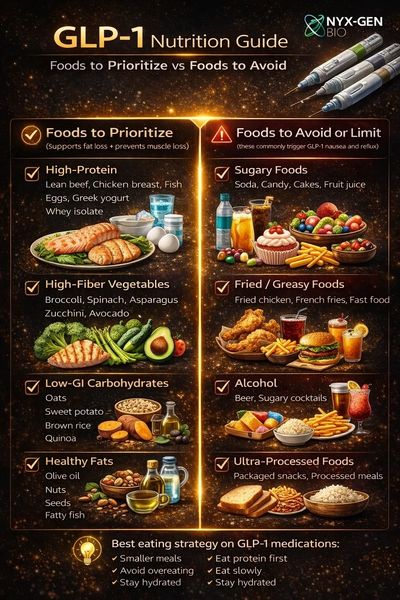
Foods Often Easier to Tolerate

Many individuals report better comfort when focusing on foods that are nutrient-dense and easier to digest.

Common examples include:

Lean Protein Sources

Protein helps support muscle mass and may help maintain satiety.

Examples include:

  • Fish
  • Chicken or turkey
  • Eggs
  • Greek yogurt
  • Tofu or plant-based protein sources

Vegetables

Vegetables provide fiber, micronutrients, and volume without excessive caloric load.

Examples include:

  • Leafy greens
  • Broccoli
  • Zucchini
  • Peppers
  • Cucumbers
  • Asparagus

Whole Foods with Moderate Fat Content

Healthy fats may help maintain energy levels while keeping meals balanced.

Examples include:

  • Avocado
  • Olive oil
  • Nuts and seeds
  • Fatty fish such as salmon

Hydration

Maintaining adequate hydration can help support digestion.

Common choices include:

  • Water 
  • Mineral water 
  • Unsweetened tea
  • Electrolyte beverages without excessive sugar

Foods Some People Limit While Using GLP-1 Medications

Because gastric emptying is slowed, certain foods may feel uncomfortable or cause digestive symptoms in some individuals.

These commonly include foods that are highly processed, very fatty, or extremely sugary.

Foods to Avoid

Highly Processed Foods

Examples include:

  • Fast food
  • Deep-fried foods
  • Packaged snack foods
  • Ultra-processed desserts
     

These foods can be calorie dense and may be harder to tolerate when digestion slows.


Very High-Fat Meals

Large, heavy meals high in fat may contribute to:

  • Stomach discomfort
  • Nausea
  • A feeling of fullness that lasts too long
     

Moderation is often more comfortable for digestion.


High-Sugar Foods

Foods very high in simple sugars may contribute to:

  • Blood sugar fluctuations
  • Increased gastrointestinal discomfort for some individuals

Examples include:

  • Sugary drinks 
  • Candy 
  • Sweet baked goods 
  • Highly sweetened desserts


Large Portion Sizes

Because appetite is often reduced, eating very large meals may lead to discomfort.

Some people find smaller, balanced meals easier to tolerate.

Protein and Muscle Preservation

During weight loss, maintaining adequate protein intake is commonly discussed in relation to preserving lean tissue.

Lean muscle mass contributes to:

  • Basal metabolic rate
  • Physical strength
  • Long-term metabolic health
     

Protein-rich foods are therefore often emphasized in discussions of nutrition during weight loss.

Individual Response Varies

Responses to food while using GLP-1 based medications can vary widely between individuals

Factors that influence tolerance may include:

  • Dosage changes
  • Individual digestive sensitivity
  • Meal size and composition
  • Overall metabolic health
     

Adjusting food choices gradually often helps identify what works best for each individual.

Long-Term Nutrition Considerations

GLP-1 medications are tools that influence appetite and metabolic signaling. Long-term health outcomes still depend on overall lifestyle factors, including:

  • Nutritional quality of food choices
  • Physical activity
  • Sleep
  • Stress management
     

Balanced eating patterns remain important regardless of medication use.

Important Notice

This page is provided for educational and informational purposes only.

It does not constitute medical advice, diagnosis, or treatment guidance. Individuals using prescription medications should consult qualified healthcare professionals for personalized guidance.

Copyright © 2026 NXY-GEN BIO - All Rights Reserved.

Powered by

  • Privacy Policy
  • Terms and Conditions

This website uses cookies.

We use cookies to analyze website traffic and optimize your website experience. By accepting our use of cookies, your data will be aggregated with all other user data.

Accept