Signed in as:
filler@godaddy.com
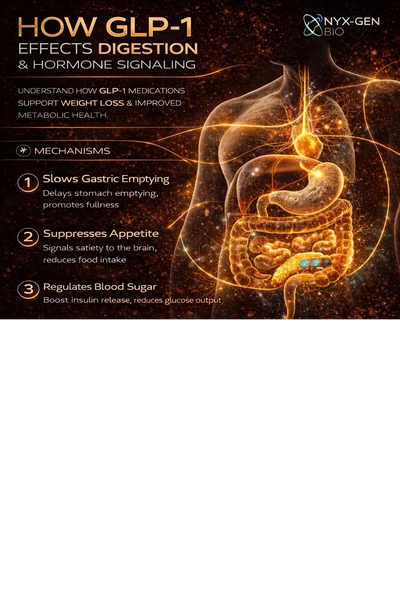
GLP-1 medications influence digestion through several interconnected physiological pathways.
These effects are related to the hormone glucagon-like peptide-1 (GLP-1), which plays a role in glucose regulation, appetite signaling, and gastrointestinal function.
One of the primary digestive effects of GLP-1 receptor activation is slower gastric emptying.
This means food moves from the stomach to the small intestine more gradually.
This mechanism contributes to:
Slower gastric emptying is a central reason why these medications influence eating patterns.
GLP-1 signaling also supports glucose regulation by influencing insulin secretion in a glucose-dependent manner.
This helps coordinate:
These processes contribute to improved glycemic control.
GLP-1 interacts with neural circuits that regulate hunger and satiety.
These pathways connect the digestive system with the brain through the gut-brain axis.
Activation of these pathways can lead to:
Because food remains in the stomach longer, some individuals may notice changes in digestive comfort.
These can include:
Responses vary widely and often improve as the body adapts.
The digestive system communicates continuously with the brain through hormones and neural signaling.
GLP-1 medications interact with this system, influencing both digestion and appetite simultaneously.
This interaction explains why these medications affect both how much people eat and how food is processed.
This page is provided for educational and informational purposes only. It does not provide medical advice or treatment guidance.